Values and ethics in teaching and learning (15.10.2019, Individual task)

I have experience of working as a university lecturer, as a university lecturer I was fully responsible for conducting lecture, developing teaching material, lecture notes, student exercise, preparing for exams, students’ performance assessment and evaluation. In my teaching I do feel that I have great responsibilities towards society and the future of young generation. This means I have to bear some competencies, for example lesson planning, assessment and feedback methods, teaching and guiding methods, and so on.

My teaching philosophy has been highly influenced by system thinking. Before I plan a lecture I try to develop the course objective and teaching materials by answering the questions like: what are the message that I want to convey to my student during the course, after completing the course what is the minimum knowledge each and every student should have, how to build a team work, how to maintain two way communication during the lecture hours, and finally how to evaluate or make sure that the students have the basic understanding on the subject matter. It’s like system engineering which starts with definition of needs and the desired system goes through tests and evaluation before delivering to customer for operational use.

In my teaching and learning process I always try be fair with myself and with the students. I believe that personal/cultural values and ethics is very important in teaching and learning. For example, how fair I am in bearing teachers responsibility, for example lesson planning, use of materials produced by other, lesson implementation and assessment. I always try my best to be transparent in my teaching, for example, I always ask my student to make peer review of individual and group assignment. Furthermore, as a teacher I always try my best to follow the rules, regulations, and guidelines provided by the university.

I believe that each and every individual has own ways of learning, as for example, some prefer for contact teaching while others prefer for distance learning and self-study. Therefore, I always try my best to meet the needs of these learners through blended learning. Besides these, I also prefer to make full use of small case studies, group work, self-study packages, and individual assignments and so on. From my teaching experience I have realized that students enjoy learning by doing.

Based on my experience both as student and teacher I can say that working in multicultural environment is completely different, the peoples set of mind, working style, division of resources and labor, and many things are different.  According to Swazey and Bird (1995) people from different societies and culture traditions have a range of attitudes, beliefs, and values that affect how they define ethically “acceptable” standards and practices, what they define as “ethical” issues, and how they perceive and respond to those issues.  Maybe it needs more flexibility and patience to be effective in multicultural teaching and learning environment.  

For better learning experience both teacher and students should in the same level of understanding and motives to learning. Here comes the role of ethical reasoning (Strike and Soltis, 2015). The ethical reasoning is all about the applications of different cases (the things that we have learned) and the capability to make a judgment whether the gained knowledge can be taken or worthwhile to take into practice.  

In conclusion, I could say that the values and ethics in teaching and learning is not only important to teachers but also to students. As a teacher, during my teaching, I always encourage team work, this is because in the future students will be working in a team, either they work an entrepreneur, or work as an employee, also at the University of Vaasa we encourage our students for team work and entrepreneurship. I always respect student’s individual capability for learning, I believe that each and every student have different approach for learning, some are independent learned, some needs extra time, and some prefer group work. I keep my doors open for any kind of problems my student come across, for example problems in time management, problems of understanding the subject/topic taught, problems of finding external sources for learning, and so on.

Note: I have commented blog’s of Arup, Uche, and Hosein.

Strike, K., & Soltis, J. F. (2015). The ethics of teaching. Teachers College Press.

Swazey, J. P., & Bird, S. J. (1995). Teaching and learning research ethics. Professional Ethics, A Multidisciplinary Journal4(3/4), 155-178.

Assessment and Feedback (8.10.2019)

Assessment and feedback plays an important role in motivating both teacher and student for better learning experience. Assessment and feedback needs to be both ways i.e. both teachers and student needs to provide assessment and feedback. Here, the word assessment may not be relevant in case of teacher rather feedback would be better.  

Let’s try to understand what does assessment and feedback mean to a teacher. Assessment refers to the information given to a learner about his/her progress in studies while feedback refers to the information given to a learner on his assessment. For example, let’s have a look on the following picture (this is my own picture, this was the example that came to my mind during the online teaching practice in explaining the difference between assessment and feedback. However, during the teaching practice I explained on words, but in the blog I put it as picture as well. ).

The purpose of assessment and feedback is to find a justified ground for some corrective actions, it could be consideration of personalized teaching and learning methods, more exercise, changes to teaching materials for example.  The act of assessment and feedback is carried out for four main reason, they are, for controlling and monitoring the teaching and learning, for predicting the future learning growth of students, for motivating learner, and to find the areas where further development is needed. The intended assessment could be quantitative (as shown in the figure above) or qualitative, for example, pass/fail/accepted, and so on. Likewise, feedback needs to be provided on specific i.e. concrete rather than general.

For a better teaching and learning experience the act of assessment and feedback needs to be periodic i.e. at least couple of times during the time of course implementation.

Assessment can be made in two forms, first competence assessment and the second learning in progress. Here competence assessment refers to the examination or demonstration of the knowledge what a student have learned, it also helps a teacher to evaluate his/her teaching methods, materials and so on. Likewise, the assessment of learning in progress refers to the examination of current learning methods and its impact in students learning i.e. how well students are learning, are they benefitted, and so on.

The assessment methods could be formative and summative, the purpose and the difference between these two methods can be shown in the following figure:

However, some people (Here, by some people I am trying to refer to our discussion during the online teaching practice, we had a short discussion that should we consider the final grade as an assessment or not? ) does not consider final grade as an assessment, but in my opinion it’s a part of assessment. As shown in the figure, formative assessment is the basis for feedback to students while final grade represents the entire progress of studies of a student and his/her competence in a particular subject. In this context Bailey and Garner 2010) says that the usefulness of formative assessment depends upon the institutional policies and departmental practices. This means the process and the methods of formative assessment needs to be clearly defined.  

The act of assessment differs from society to society, for example the grading of students is avoided in Finnish education system, however the teacher are supposed to make an assessment of their student learning progress and provide them some feedback for better learning experience. On the other hand in Indian education system grading is very important, the student needs to be ranked on the basis of the grades they obtain in the assessment process.

In conclusion, it is reasonable to say that the assessment and feedback is a very important part of education system. It helps not only students to make improvement in their studies but also the teachers in developing better teaching materials and the learning environment. However, one needs to understand that assessment and feedback does not guarantee better performance in every context and for every students (Evans, 2013). Therefore, maybe individualized assessment might be better, at least I think so.

Note: I have commented blog’s of Arup, Imran, and Waheed.

Reference:

Bailey, R., & Garner, M. (2010). Is the feedback in higher education assessment worth the paper it is written on? Teachers’ reflections on their practices. Teaching in Higher Education15(2), 187-198.

Evans, C. (2013). Making sense of assessment feedback in higher education. Review of educational research83(1), 70-120.

Implementation 2 (Focus on classroom/frontal teaching,1.10.2019)

Either it is education or working community team work team dynamics plays an important role in completing a task effectively and efficiently. Here, team dynamics refers to the social process by which people interact and behave in a group environment. For a teacher the knowledge of team dynamics and the collaborative methods is very important not only to enhance teaching practices but also to enhance student learning experience.

When people working in a team, the behavior of one member impact the behavior and the outcome of other team member, we have experience this in many situations in our daily life. The same principles applies in teaching and learning as well. A team always work for common goal, for example, football team, project team, political team, and so on. However, when it comes with team management we all face similar problem, for example how to maintain equal distribution of work and resources, one person is working too much, there might be pressure from peer etc. there is a general behavior shown by team dynamics, for example, when a team is formed people gets excited but by the passage of time there might be some sort of disappointment within the group member or may have some kind of demotivation, there could be many reason for it, for example there could be personal reason or the behavior from the other team member. However, if the team dynamics works well, the end result is always the best. It is very crucial to keep the team spirit.

In general a group formation can be described in following four ways:

  • Random: Group is formed without any criteria. 
  • Instructor-generated: The instructor selects the group based on some predefined criteria. 
  • Self-selected: The students are allowed to form their own group. It’s a free choice to students.
  • Mixed: Group is formed following some very basic criteria, for example the way our group is formed.

In spite of the method chosen for group formation, there is a common challenge faced by teacher and students i.e.  How to maintain collaboration between the group members?

For better teaching and learning experience, collaboration in group is very important. The group collaboration helps students to remain engaged in class activities and most importantly better understand the content, and students feel active, motivated and un-isolated while working in a team. But how to define and measure the level of student activation and participation in group discussions? How to keep students motivated? etc. are the common challenges of group collaboration. Maybe group collaboration can be enhanced, if we are able to define the group objectives, it is better to keep a small group size (maybe 4-5), regular feedback on peers and group interaction might be useful.  A feedback and interaction helps us to reduce weakness and improve strengths.  Group collaboration strategies like think – pair – share, the jigsaw learning model, and project-based learning might be useful in enhancing our teaching and learning experience.

Each and every individual has different capability of learning, as a teacher we should be able to identify and support individual learning paths. It does not mean that team work needs to be avoided. In my teaching I have also realized that some student prefer to do task individually while some prefer to do group work. Likewise, some student finds difficulties in finding relevant materials that support their learning, while some find it very easy.

Curriculum is the core of teaching and learning, therefore while developing curriculum a teacher needs to pay attention to personalized and individual learning. Didactical approach (the relationship between “teacher ……> students ……>subject”) may be very useful. Didactical approach helps a teacher in proper lesson planning, implementation and monitoring. Likewise, there are different methods that can be used in promoting students personalized and individual learning, for example different games, fair and positive competition between students, use of different videos, simulation, developing practical problems and asking students to approach that problem, and so on.

Reflection, learning dairy, assignments (individual and group), project works (individual and group) are the few examples how a teacher can enhance students learning both at personal and group levels.

Giving free hands to students might also be a good approach to guide students. However, a teacher should develop rules of the game otherwise the students might get lost (might find interest in something else or might get too much freedom and does nothing). We always needs to remember that trust (on own and between students and teacher) is very important in enhancing the experience of teaching and learning. As a teacher we should have the patience to listen to students stories, keep them motivating, providing positive and encouraging feedback, and so on.

In conclusion, we can say that it is very important to understand the group dynamics, so that we can use appropriate methods and tools that support students individual learning paths. As a teacher in my future jobs I always try to understand the class dynamics, so I can better plan, implement, and monitor students learning both at individual and group levels. 

Implementation 1 (Focus on virtual/online teaching,17.09.2019)

The development in science and technology have made information landscape to be very huge. This has made the traditional teaching and learning to be insufficient to meet the needs of young generation.  The recent trend in teaching and education shows that virtual environment has become one of the best approach to overcome the challenges of traditional teaching and learning. However, the questions like “How can present virtual environments be made versatile and activating?” still remains open.  Here, versatile means the virtual environment should be able to use both for teaching and learning, and activating means how to use virtual environment for teaching and learning.  Before I address this question I would like to clarify the meaning of virtual (online) teaching.

Virtual learning environment refers to web-based learning where students and teacher meet online   instead of traditional face to face class room teaching.  Moodle, Blackboard, It’s learning, Khan academy are the few examples of virtual learning environment. These days virtual teaching is becoming more and more popular, especially in the western societies. However, some teachers prefers traditional lectures i.e. face to face teaching and learning instead of virtual teaching. This might be because of the fact that some courses needs face to face teaching, i.e. the courses where there is need for physical work and experiments (both scientific and non-scientific). In order to have better learning experience in virtual teaching both students and teachers should have the knowledge of online platform and should be able to use the different features.  In the similar manner, the virtual learning environment should be reliable (refers to properties that supports the system functionalities), relevant (refers to the learning materials), and responsive (refers to availability of sources as and when needed).

A virtual learning can be made versatile and activating if the users pay attention to sound quality during communication, for example both high and low pitch sound, background noise impacts the way we communicate.  ​Good internet helps in maintaining stable communication. Discussion should be promoted, this helps in better understanding the topic under discussion. However, the discussion on personal level should be avoided. Proper listening, active use of body language especially facial expression, and the use of common language of communication, for example English are very useful in making virtual learning to be versatile. 

In the similar manner, a virtual learning can be made activating if the users (teacher and student) are provided with enough training and guidance, so that they can understand the different features and system requirements.  The knowledge of installation and registration procedure, terms and conditions, practical knowledge (How to share files or video call, what video call is meant for and what file sharing is meant for) etc. helps virtual environment to be activating.

Here, we need to understand that the virtual environment is also not free from safety issues. Here, the safety issues in virtual environment refers to factors like equality, bullying etc. Sometimes it can be problematic not only to students but also to teacher, therefore, both teacher and students should be aware with these factors. Both the teacher and students should be aware of

  • terms and conditions of using online materials, should be able to analyze the good and bad impact of virtual learning environment, and should be aware of the use of personal credentials (is it safe to share personal information?) 
  • a teacher should respond immediately if any student faces bullying (use of vulgar language to others, misusage of personal information), also the student should be aware of the impact of bullying.
  • the knowledge of cyber ethics (e.g. how to use and mention the source, plagiarism, copy rights, licensing etc.), cyber safety (e.g. complication of using of public Wi-Fi, public computer, etc.), and cyber security (e.g. chances of virus attacks, use of cookies etc.) is very useful.

There are many different teaching methods that can be used in both traditional and virtual learning environment, for example, mind-map, teaching discussion (splitting students into small group for discussion during teaching session), step by step discussion, and presentation i.e. lecturing and so on. However, if there is need for the use of physical objects (like paper, glue etc.) or physically experimenting something during teaching then the methods like reading circle, presentation walk, role playing and so on may not appropriate for virtual learning environment.

In conclusion, it can be said that virtual environment is not different from traditional teaching and learning, but one needs to understand how to use it. For better learning experience both teacher and students should be provided with training and workshops before shifting to virtual learning environment from traditional learning environment.

Learning environment (EduSci-part 1)

Multicultural education by James bank

The main idea of this theory is how to train students to be efficient in different environment, for example in their own local environment and the entire world i.e. multicultural environment. The basic idea within multicultural education is the restructuring of the schools environment so that students learning experience remains in the same level. This learning theory consists of five dimensions. They are as follows:

Content integration: This means the use of different cultural example in teaching and learning.

Knowledge construction: This means the application of cultural assumption in teaching and learning.

Prejudice reduction: This means the reduction of cultural belief that are not based on reasons or facts, each of us have some kind of belief that comes with our cultural background that might have helped to develop some kind of belief, which is really hard to get rid off.

Equity pedagogy: This means the use of different teaching environment according to student groups. For example the western student and the eastern student learning environment is completely different, so they needs to be treated differently.

Empowering school culture: This means the restructuring of schools learning environment so that each and every students have the feelings of equality within the group.

 The multicultural education can be seen in the following figure.

http://www.flanderstoday.eu/sites/default/files/webimages/multiculturalism.jpg
Multicultural education

The above figure can be considered as multicultural education for following three reasons:

  1. The figure shoes that the students belongs to different religious belief.
  2. There is gender equality.
  3. The student group represents students from different cultural background.

Experimental learning theory by Peter Jarvi:

According to this theory we can have better learning experience by doing i.e. the better knowledge can be gained by experimenting or doing.

The multicultural education can be seen in the following figure.

http://www.jayhawksabroad.dept.ku.edu/wp-content/uploads/2014/10/ExL-21000-1.png
Experimental learning

The above figure can be considered as experimental based learning for following three reasons:

  1. The figure shoes that the students are trying do something by their hand in the process of learning.
  2. Different student are doing different things but within a group suggesting that they are doing different activities but representing the same thing, maybe in the later stage they will be sharing their experience of learning.
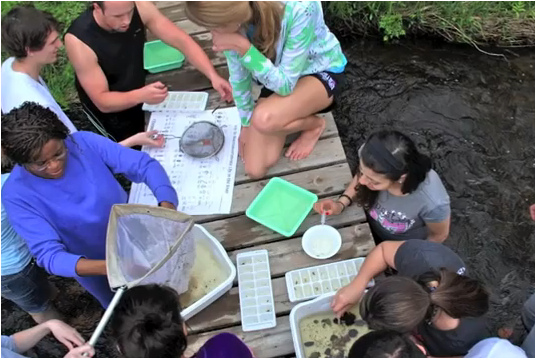
  3. The picture shows that they are not in traditional class room environment but instead experience something different environment, maybe somewhere in the forest.

Planning for Teaching (10.09.2019)

Planning for teaching is not an easy task, especially for teachers who are in early stage of teaching career. To understand the various aspects of planning for teaching we went through online teaching practicing session on 10.09.2017. During the online teaching session we covered wide range of topics, group discussion, teaching practice, and so on. The specific topics that we covered during the online teaching practice are as follows:

  1. How do the official documents and regulations affect the planning of the teaching in your vocational field? Where can you find all this information?
  2. How do different learning theories and views of learning affect the planning of the teaching in your particular vocational field and in competence-based education?
  3. How will you promote learning and competence using a classroom and virtual settings?

The relationship between these three topics can be demonstrated in the form of a triangle as shown below:

Figure: Three pillars of lesson planning.

As shown in the above figure teaching planning is affected by three factors they are: documents & regulationslearning environment, and the learning theory. Here, documents and regulations means the instruction/course structure/curriculum and the guidelines that a teacher needs to follow in lesson planning. These documents can be obtained from the concerned institution. Sometimes these documents are publicly available and sometime these documents are available to concerned teachers only. Please follow the following link to see an example of documents and regulation controlling lesson planning: Oulu University of applied sciences and University of Vaasa.  

Similarly, the learning environment can be developed within the scope of classroom and virtual setting. Classroom setting means the traditional way of teaching and learning, where the teacher and student have face to face meeting, on the other hand virtual setting means the way of teaching and learning by means of internet, in case of virtual setting students and teacher are connected by means of some sort of digital tools, for example, skype, zoom, adobe connect etc. It can be in real time or the as and when needed (different sessions are recorded and can be accessed when needed or ones convenience).  

Finally, the learning theory needs to be considered in lesson planning. This is simply because of the fact that each and every individuals have their own way of learning, for example some prefer contact teaching, some prefer virtual setting, and some needs closed guidance while other needs open environment. Furthermore, there could be needs for especial need students, for example students with physical disabilities (vision, listening, and oral). In fact learning theories defines how an individual interpret, understand, and apply those knowledge in practice. Few examples of learning theories are constructive alignment, inquiry based learning, and competence based learning. Under constructive learning students are engaged in active participation through group work, project work, collaborative learning. Here the basic idea is to promote student learning experience by creating student friendly environment. Inquiry based learning starts with asking a question, here, the basic idea is to develop analytical and problem solving skills. Similarly, under competence based learning students are given free hand (e.g. no time limit, no content limit) in learning.

In conclusion, lesson planning can be simply represented as three step process i.e.

Input (documents and regulations)…..> Process (learning environment and learning theory)…..> Output (the final knowledge gained by the student). In this process students learning experience is highly determined by learning environment and the adopted learning theory. Whatever, the learning environment and the learning theory adopted, a lesson planning follows the following information in details:

  1. Course description: What is course about?
  2. Prerequisite: If there is any prerequisites it needs to be defined.
  3. Course objectives: What are the goals of the course? What to expect after the course?
  4. Content: What is the content of the course?
  5. Recommended optional programme: If there is need for any freehand/optional reading?
  6. Accomplishment method: How student can complete the course?
  7. Execution method: Teaching method?
  8. Course materials: What are the course/teaching materials/where they can be accessed?
  9. Literature: What literature/books to be followed
  10. Evaluation criteria: How student’s performance will be evaluated?
  11. Assessment Frameworks: How student’s performance are evaluated?
  12. Further information/Rules of the road: What are the obligation and the responsibilities of the students during the course?
  13. Time table: When the course will be implemented?

My first two days at Oulu (27-28.09.2019)

On 27th August 2019 I started vocational teacher education programme at Oulu University of Applied sciences. There are 20 students coming from different background and different region around the world. However, during the face to face meeting only 15 students participated.

Before the first meeting I was having many questions in my mind, for example, what kind of background and the experience my student colleagues might have? How can I complete 60 ECTS? What might be the recommendation for teaching practice? How does the content of the programme look like? How I can enhance my teaching experience? And so on.

During the session I feel like I have gained the necessary information, I got answers to my all the questions that I had in my mind before the orientation. It was a nice experience. I was happy while returning home. I note down important information and links, also I got lazy to write down all the information assuming that something will be in my head. In fact when I get home and tried to go through all the information that I noted in my notebook, tried to recall all the events, I got lost, everything was so confusing, and everything mixed up. Maybe in the future I need to be a bit more organized, the knowledge of skills like shorthand writing and note taking might be useful.

However, the important lesson that I learned during the first two day session is the answer to following questions:

How to complete 60 ECTS

  • First ways to complete 60 ECTS: By demonstrating teaching competencies and skills. The competencies can be demonstrated by teaching experience (lesson planning, implementation, and assessment skills), scientific publications, certificate of previously participated courses.
  • Second ways to complete 60 ECTS
    • Active participation in webinars + completing different tasks, example, lesson planning and implementation, writing reflection on each of the webinars, demonstrating team work, and so on. (40 ECTS)
    • Teaching practices (10 ECTS)
    • Basics of educational science (10 ECTS)

What is the difference between reflection and the learning dairy?

I became familiarization with the term reflection and the different ways to writing own reflection. I was considering reflection and the learning dairy to be the same but I came to know they are completely different. During the discussion one of my friend explained that reflection is all about personal assessment of own-self, what was the level of competence (before), what have been learned (during the session), and what can be carried out for the future in order to have a better experience of an event, in our case teaching and learning. On the other hand learning daily is the summary of an event or a course.

  • Reflection: An assessment of own learning (past experience….present situation…..future plan).
  • Learning dairy: A long story of an event, a course or a lesson.

At the moment, what is the level of my teaching competence?

I tried to find the answer to this question, I could not figure it out. I am in very early stage of my teaching career, I have very little experience of teaching. During my teaching I have realized that I need to work on time management skills, presentation and communication skills, and language skills (both English and Finnish). Maybe, I prefer to call myself a novice teacher.

What are my future plan to improve my teaching competencies?

I will be actively participating in all the webinars, team work, and writing blog posts (reflections). This is the plan at the moment, as the study progress I can have better understanding of my competencies and I may have to change my current plan.

In general the two days orientation at Oulu went fine, a completely new experience. It was a good opportunity to be introduced with future professional teacher. Furthermore, I was able to think about my own teaching competencies.

Finally, if a competencies cannot be demonstrated than one really needs to think whether he/she bears that competencies.

Introduction

I am Binod Timilsina. I hold a doctoral degree in economics and business administrations. All of my education from bachelor of engineering to doctor of science are within the field of industrial management. My areas of expertise are operations and strategic management.

My teaching and research has always been influenced by “pragmatism”, a philosophy that guides us to see and approach a problem in terms of its practical meaning and implications.

This blog post starts with my first two days experience to Oulu University of Applied Sciences, and follows my reflection to different weekly webinars, and finally I will conclude my blog post by presenting my personal development plan as a teacher.

Design a site like this with WordPress.com
Get started